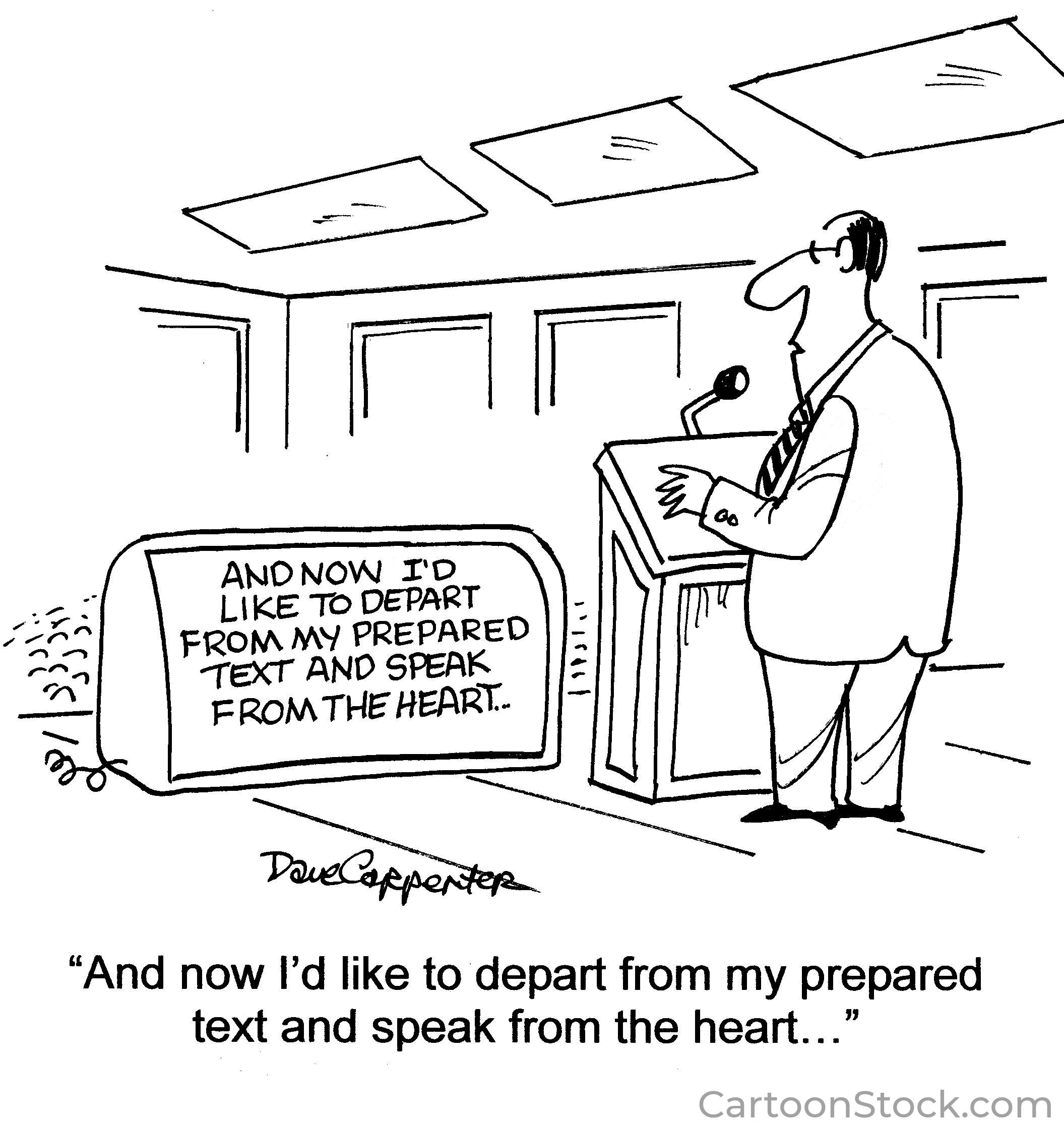
When I tell people that I do stand up, some people respond that while they like the idea of writing and telling jokes to a friend or two in the pub, but aren’t so keen on performing them to a group. I asked one person that I knew a little better why that was - they mentioned that they were sure they would cower on a stage and that the crowd would immediately sense fear.
However, I genuinely think that anyone who would like to do it and the only thing that is blocking them is fear should take a course immediately. I’ve spoken to people much more experienced and accomplished than me on the comedy scene and they say the same thing. You don’t get any less scared, you just get a little bit better at pressing the “fear override button”. If you’re reading this and thinking the same thing, do it. Open another tab, sign up to do a stand-up course and you’ll see what I mean in 6 weeks’ time. You’ll wish you did it sooner.
One of the things it helps you with is body language. I’m planning to enter more comedy competitions later this year, so as a strategist, I set about doing some research: I analyzed the sets of past comedy competition winners. As I went through scores of YouTube clips, I noticed a pattern: those who were great at acting out how they felt, as well as writing strong jokes were the most effective at selling their ideas. Here are some examples:
*warning - you may wish to watch the full versions after work!*
It may seem a bit weird to try and trick your own brain into feeling something you don’t feel right now, but it can be helpful - research has shown that a simple act, such as smiling can move the mind into a more positive state.
I’ve always had a vague sense that body language matters. I’ve watched the TED talk on the topic by Amy Cuddy, and see what it looks like when politicians take it a little too far (see Tory Power Stance for details) - but it was a lesson in the comedy course that showed me its power.
Standing in a circle, we were told to act out different emotions, no words allowed. First came ‘happy’. Then sad. Then timid, then boastful, then relaxed, and finally confident.
I noticed how confidence was placed deliberately at the end - if they started there, many of us would have struggled. What does that look like? I would have likely asked myself. How do confident people stand? However, once we got in the rhythm of acting out different characters, we could sell the idea of confidence to ourselves. By the time the session was done - the lesson that we can act out a character and let this guide our thoughts and feelings, or use our bodies to project our authentic emotional state so it lands with the audience - stayed with us.
As social creatures, we can ‘catch’ the feelings of others in a room. It’s why empathetic, emotionally intelligent leadership matters so much. If we act angry, or irritable, or brooding with the people around us, they’ll pick up on those emotions and pass them on. But we can use this tendency for good - when we are communicating something that matters to us, we want to feel confident in ourselves, which as a result helps others feel confident in us.
Since lockdown, many of us have felt that creeping sense of doubt that we may be presenting to someone who has casually nipped to the loo (if you do please switch off the microphone!), or is in another room chastising a toddler, I think these learnings can be applied equally to a stage, a room, or a Zoom:
Try acting out emotions by yourself to get in the zone: you don’t need to be in a room with a bunch of comedians to do this - you too can copy the acting out emotions exercise. Starting with more straightforward emotions like ‘happy’ and ‘sad’ are the way in. Then once you have those mastered, you may wish to experiment with the kind of emotions that you wish to emphasize in that important meeting - practice acting out wonder, interest, or decisiveness.
Where possible, allow your feelings to follow the body: if you’re sitting at a desk now, try straightening your posture, allowing yourself a slight smile. Soften the eyes. Sometimes, it can be small and simple gestures like this that can influence a fairly neutral or slightly flat mood - for the research backing this check out Amy Cuddy’s power poses.
When in social situations, maintain steady eye contact: really taking in the other person helps with a sense of engagement and deep interest in what others are saying. It’s a form of active listening, where you can look out for facial cues, or fidgeting at key moments to try and understand more than what’s being communicated verbally.
Observe the body language being sent your way by others: A great tip from the book Improvise! Use the Secrets of Improv to Achieve Extraordinary Results at Work suggests that where appropriate, you can deepen a conversation by observing what you see. For instance, reading someone’s body language and saying “You seem reserved about this” to unlock a more meaningful dialogue with another person.